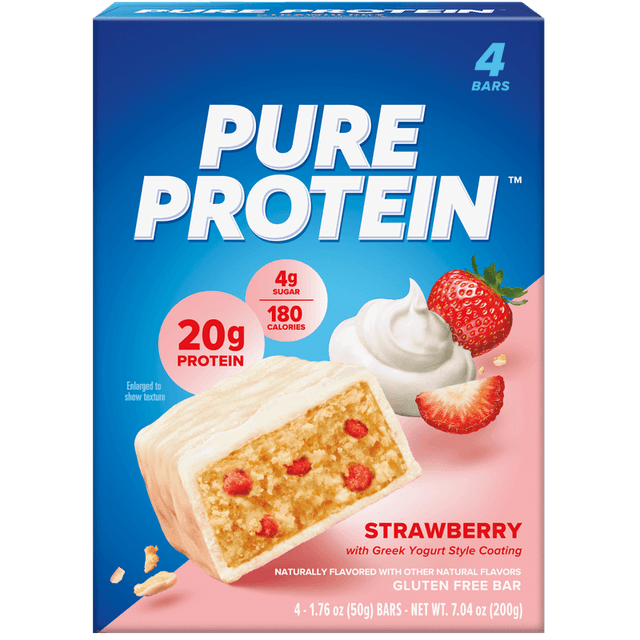
Pure Protein · Protein Bar
Pure Protein Bar · Strawberry Greek Yogurt
- GLP-1 Friendly
- Gluten-Free
20g protein
180 calories · per 1 bar (50g)
✦ Protein Score
Excellent
11.1g of protein for every 100 calories. The more of the calories that come from protein, the higher the score.
Protein From
- Whey Protein Concentrate
- Whey Protein Isolate
- Milk Protein Isolate
- Collagen
- Soy Protein
- Yogurt
- Peanut Flour
Complete proteinSee analysis
Flavours (15)

Protein Pal Analysis
Protein Source
Where the 20g of protein comes from, largest contributor first
Complete protein, fast absorbing. The least processed whey, with more lactose and fat than isolate.
Complete protein, fast absorbing. Filtered to remove most of the lactose and fat.
Complete protein. Roughly 80% casein and 20% whey, so it digests slower than whey alone.
Incomplete protein. No tryptophan and very little leucine, so it counts toward the label's protein but contributes little to muscle.
Complete protein. The only common plant protein with a full amino acid profile on its own.
Complete protein from milk, mostly casein.
Defatted peanuts, roughly half protein by weight. Low in methionine.
Also Contains
Sugar Alcohols
- Glycerin
Chemically a sugar alcohol, used to keep bars soft and moist rather than to sweeten. The EU safety authority found no safety concern at food levels. Large amounts can draw water into the gut and have a laxative effect.
EFSA re-evaluation of glycerol E422 (2017) - Maltitol Syrup, Maltitol
A sugar alcohol that does raise blood glucose, with a glycaemic index around 35 where most polyols are near zero. It is the usual cause of the digestive complaints from protein bars: bloating, gas and a laxative effect, typically above roughly 30 to 40g a day.
Livesey, Nutrition Research Reviews (2003)
Refined Carbohydrates
- Maltodextrin
A rapidly digested glucose polymer made from corn, rice or tapioca starch. It raises blood glucose at least as fast as table sugar but counts as carbohydrate rather than sugar on the label, so a low-sugar product can still deliver a fast glucose load. The amounts used in protein products are usually small.
Hofman et al., Critical Reviews in Food Science and Nutrition (2016)
Tropical Oils
- Fractionated Palm Kernel Oil
Palm oil is pressed from the fruit of the oil palm; palm kernel oil comes from the seed inside that same fruit. Neither is a typical seed oil: the concerns people cite when avoiding seed oils are a high omega-6 linoleic acid load and the oxidation that polyunsaturated fats are prone to during refining and heating, and both palm oils are mostly saturated fat, with very little omega-6 and much greater oxidative stability. Palm oil is around half saturated fat, mostly palmitic acid, and a meta-analysis of controlled trials found it raises LDL cholesterol compared with vegetable oils low in saturated fat; palm kernel oil is more saturated again. Both stay solid at room temperature without hydrogenation, which is why coatings use them.
Sun et al., Journal of Nutrition (2015)
Seed Oils
- Canola Oil
Refined oils high in omega-6 linoleic acid. Controlled trials show oils rich in linoleic acid lower LDL cholesterol compared with saturated fat, and heart health bodies support their use. The concern raised in popular coverage is about the omega-6 to omega-3 balance of the wider diet, and about oxidation products when these oils are repeatedly heated.
American Heart Association advisory, Circulation (2017)
Emulsifiers & Thickeners
- Cellulose Gum
Cellulose-based thickeners: cellulose gum (carboxymethylcellulose) and cellulose gel (microcrystalline cellulose), often used together in shakes. A randomised controlled feeding trial of carboxymethylcellulose in healthy adults found it altered gut bacteria and reduced the protective mucus layer of the gut. The trial was small and short.
Chassaing et al., Gastroenterology (2022)
Sweeteners
- Sucralose
Synthetic zero-calorie sweeteners such as sucralose, acesulfame potassium and aspartame. Regulators consider them safe at typical intakes, but the WHO advises against using non-sugar sweeteners for weight control, finding no long-term benefit, and in 2023 classified aspartame as possibly carcinogenic while leaving its acceptable daily intake unchanged.
WHO guideline on non-sugar sweeteners (2023)
Nutrition
per 1 bar (50g)≤1g: the label prints “<1g” for this value.
Protein efficiency
computed from the labelIngredients
Ingredients
Protein Blend (Whey Protein Concentrate, Whey Protein Isolate, Milk Protein Isolate), Hydrolyzed Collagen, Soy Protein Isolate, Glycerin, Maltitol Syrup, Water, Maltitol, Maltodextrin, Sugar, Fractionated Palm Kernel Oil, Natural Flavor, Whey Protein Concentrate, Canola Oil, Tapioca Starch, Greek Yogurt Style Powder, Nonfat Dry Milk, Corn Starch, Dried Strawberries, Citric Acid, Soy Lecithin, Fructose, Lactic Acid, Dextrose, Corn Syrup Solids, Natural Color [fruit and vegetable juice concentrates], Cellulose Gum, Sucralose, Salt, Defatted Peanut Flour, Almond Butter, Tocopherols added to protect flavor. Contains milk, soy, peanut and tree nut (almond) ingredients. Made in a facility that also processes tree nuts, egg, wheat and sesame.
Nutrition values are taken from the manufacturer’s published label and may vary by flavour or region. Trademarks and imagery are the property of their respective owners.


