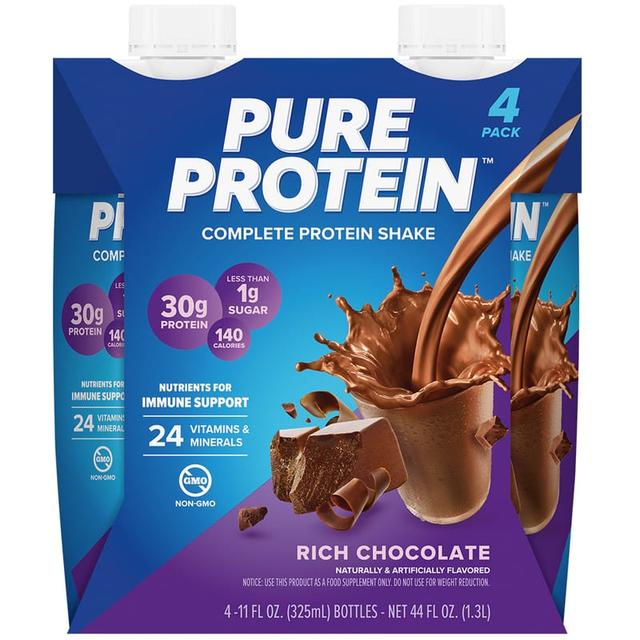
Pure Protein · Protein Shake
Protein Shake · Rich Chocolate
- GLP-1 Friendly
- Gluten-Free
- Low Sugar
30g protein
140 calories · per 1 bottle (325ml)
✦ Protein Score
Excellent
21.4g of protein for every 100 calories. The more of the calories that come from protein, the higher the score.

Protein Pal Analysis
Protein Source
Where the 30g of protein comes from, largest contributor first
Complete protein. Roughly 80% casein and 20% whey, so it digests slower than whey alone.
Complete protein, fast absorbing. The least processed whey, with more lactose and fat than isolate.
Complete protein. Slow digesting, releasing amino acids over several hours.
Also Contains
Refined Carbohydrates
- Maltodextrin
A rapidly digested glucose polymer made from corn, rice or tapioca starch. It raises blood glucose at least as fast as table sugar but counts as carbohydrate rather than sugar on the label, so a low-sugar product can still deliver a fast glucose load. The amounts used in protein products are usually small.
Hofman et al., Critical Reviews in Food Science and Nutrition (2016)
Emulsifiers & Thickeners
- Cellulose Gel, Cellulose Gum
Cellulose-based thickeners: cellulose gum (carboxymethylcellulose) and cellulose gel (microcrystalline cellulose), often used together in shakes. A randomised controlled feeding trial of carboxymethylcellulose in healthy adults found it altered gut bacteria and reduced the protective mucus layer of the gut. The trial was small and short.
Chassaing et al., Gastroenterology (2022)
Seed Oils
- Sunflower Oil
Refined oils high in omega-6 linoleic acid. Controlled trials show oils rich in linoleic acid lower LDL cholesterol compared with saturated fat, and heart health bodies support their use. The concern raised in popular coverage is about the omega-6 to omega-3 balance of the wider diet, and about oxidation products when these oils are repeatedly heated.
American Heart Association advisory, Circulation (2017)
Sweeteners
- Sucralose, Acesulfame Potassium
Synthetic zero-calorie sweeteners such as sucralose, acesulfame potassium and aspartame. Regulators consider them safe at typical intakes, but the WHO advises against using non-sugar sweeteners for weight control, finding no long-term benefit, and in 2023 classified aspartame as possibly carcinogenic while leaving its acceptable daily intake unchanged.
WHO guideline on non-sugar sweeteners (2023)
Nutrition
per 1 bottle (325ml)≤1g: the label prints “<1g” for this value.
Protein efficiency
computed from the labelIngredients
Ingredients
Water, Protein Blend (Milk Protein Isolate, Whey Protein Concentrate, Calcium Caseinate), Cocoa (Processed with Alkali), Maltodextrin, Natural and Artificial Flavors, Cellulose Gel, Magnesium Phosphate, Sucrose, Salt, Cellulose Gum, Dipotassium Phosphate, Sodium Hexametaphosphate, Sunflower Oil, Sunflower Lecithin, Sucralose, Sodium Ascorbate, Acesulfame Potassium, Zinc Chelate, Vitamin E Acetate, Ferric Phosphate, D-Biotin, Vitamin A Palmitate, Niacinamide, Copper Chelate, D-Calcium Pantothenate, Sodium Molybdate, Sodium Selenite, Manganese Sulfate, Chromium Chloride, Folic Acid, Cholecalciferol, Thiamine Mononitrate, Pyridoxine HCl, Riboflavin, Phylloquinone, Potassium Iodide, Cyanocobalamin.
Nutrition values are taken from the manufacturer’s published label and may vary by flavour or region. Trademarks and imagery are the property of their respective owners.


