David vs Barebells Protein Bars
David and Barebells sit at opposite ends of the protein bar spectrum. David is engineered for the numbers: 28g of protein in about 150 calories, achieved with a modified fat (EPG) and a stack of sweeteners. Barebells is engineered for the eating experience, and most people say it is the closest thing to a candy bar with 20g of protein. On protein per calorie it is not close, but both lean on maltitol and both include collagen in the blend, so neither wins the ingredient list outright. Every number below is transcribed from the manufacturer’s nutrition label and verified by hand, then compared across every flavour we have checked.
The numbers, side by side
Values are shown as the range across every flavour we have verified (12 David Protein Bar flavours, 18 Barebells Protein Bar flavours). Winner is decided on the median flavour.
| Per bar | David Protein Bar | Barebells Protein Bar |
|---|---|---|
| Protein per bar | 20–28gWinner | 20g |
| Calories per bar | 150 kcalWinner | 200–220 kcal |
| Protein per 100 kcal | 13.3–18.7gWinner | 9.1–10g |
| Sugar per bar | 0gWinner | 1–2g |
| Fiber per bar | 1–6g | 2–4gWinner |
| Fat per bar | 2–5gWinner | 6–9g |
| Bar size | 58–62g | 55g |
| Sugar alcohols | Maltitol | Maltitol |
| Other sweeteners | Sucralose, Acesulfame potassium (Ace-K), Allulose | Sucralose |
| Protein sources | Milk Protein Isolate, Collagen, Whey Protein Concentrate, Egg White | Caseinate, Whey Protein Isolate, Whey Protein Concentrate, Collagen |
Ingredients worth noting
David Protein Bar
- Maltitol: A sugar alcohol that does raise blood glucose, with a glycaemic index around 35 where most polyols are near zero.
- Allulose: A rare sugar the body absorbs but barely metabolises, contributing about 0.4 calories per gram with little effect on blood glucose.
- Glycerin: Chemically a sugar alcohol, used to keep bars soft and moist rather than to sweeten.
- EPG (Modified Plant Fat): A fat substitute made from rapeseed oil modified so digestive enzymes cannot break it down, so around 92 percent passes through unabsorbed and contributes almost no calories.
- Palm Oil: Palm oil is pressed from the fruit of the oil palm; palm kernel oil comes from the seed inside that same fruit.
- Carmine: A red colour made from crushed cochineal insects farmed on cactus.
- Artificial Sweeteners: Synthetic zero-calorie sweeteners such as sucralose, acesulfame potassium and aspartame.
Barebells Protein Bar
- Glycerin: Chemically a sugar alcohol, used to keep bars soft and moist rather than to sweeten.
- Maltitol: A sugar alcohol that does raise blood glucose, with a glycaemic index around 35 where most polyols are near zero.
- Seed Oils: Refined oils high in omega-6 linoleic acid.
- Artificial Sweeteners: Synthetic zero-calorie sweeteners such as sucralose, acesulfame potassium and aspartame.
- Artificial Colours: Synthetic dyes.
Where they rank
David Protein Bar
- #1 of 10 in Best Protein Bars
- #1 of 42 in Highest Protein Bars Per Calorie
- #1 of 10 in Low Sugar Protein Bars
- #1 of 9 in Best Protein Bars for GLP-1 Users
- #1 of 9 in Best Protein Bars for Ozempic Users
- #1 of 9 in Best Protein Bars for Mounjaro & Zepbound Users
- #1 of 10 in Protein Bars Without Seed Oils
Barebells Protein Bar
- #8 of 42 in Highest Protein Bars Per Calorie
- #8 of 10 in Protein Bars Without Seed Oils
- #9 of 10 in Best Protein Bars
- #9 of 10 in Low Sugar Protein Bars
- #9 of 9 in Best Protein Bars for GLP-1 Users
- #9 of 9 in Best Protein Bars for Ozempic Users
- #9 of 9 in Best Protein Bars for Mounjaro & Zepbound Users
Frequently asked questions
- Which has more protein per calorie, David Protein Bar or Barebells Protein Bar?
- David Protein Bar, with 18.7g of protein per 100 calories against 9.5g for Barebells Protein Bar (median across all verified flavours).
- Which has more fiber, David Protein Bar or Barebells Protein Bar?
- Barebells Protein Bar, with 2–4g of fiber per bar against 1–6g for David Protein Bar.
- Do David Protein Bar and Barebells Protein Bar contain sugar alcohols?
- David Protein Bar: Maltitol. Barebells Protein Bar: Maltitol. This comes from the verbatim ingredient list of every flavour we have verified.
Every David Protein Bar flavour we have verified
 Blueberry Pie28g protein · 150 kcal · 18.7g / 100 kcal
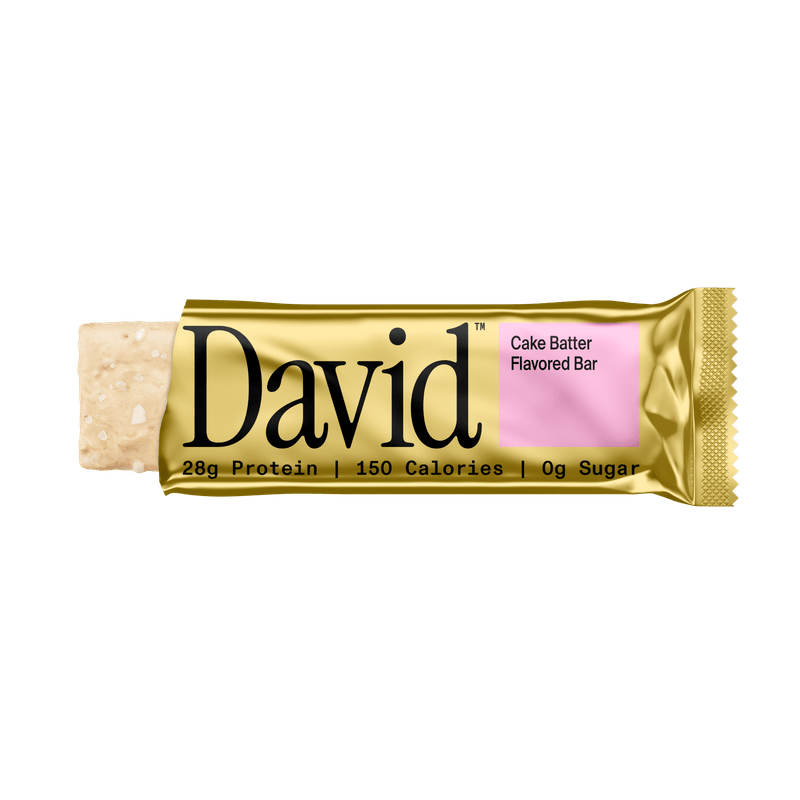 Cake Batter28g protein · 150 kcal · 18.7g / 100 kcal
 Chocolate Chip Cookie Dough28g protein · 150 kcal · 18.7g / 100 kcal
 Cinnamon Roll28g protein · 150 kcal · 18.7g / 100 kcal
 Cookie Dough Caramel Chocolate20g protein · 150 kcal · 13.3g / 100 kcal
 Double Chocolate20g protein · 150 kcal · 13.3g / 100 kcal
 Fudge Brownie28g protein · 150 kcal · 18.7g / 100 kcal
 Peanut Butter Chocolate20g protein · 150 kcal · 13.3g / 100 kcal
 Peanut Butter Chocolate Chunk28g protein · 150 kcal · 18.7g / 100 kcal
 Red Velvet28g protein · 150 kcal · 18.7g / 100 kcal
 S'mores Chocolate20g protein · 150 kcal · 13.3g / 100 kcal
 Salted Peanut Butter28g protein · 150 kcal · 18.7g / 100 kcal
Every Barebells Protein Bar flavour we have verified
 Banana Bread20g protein · 220 kcal · 9.1g / 100 kcal
 Birthday Cake20g protein · 210 kcal · 9.5g / 100 kcal
 Brownie Batter20g protein · 210 kcal · 9.5g / 100 kcal
 Caramel Cashew20g protein · 200 kcal · 10g / 100 kcal
 Chocolate Dough20g protein · 200 kcal · 10g / 100 kcal
 Coco Caramel Almond20g protein · 210 kcal · 9.5g / 100 kcal
 Cookies & Caramel20g protein · 210 kcal · 9.5g / 100 kcal
 Cookies & Cream20g protein · 200 kcal · 10g / 100 kcal
 Creamy Crisp20g protein · 200 kcal · 10g / 100 kcal
 Key Lime Pie20g protein · 200 kcal · 10g / 100 kcal
 Lemon Cheesecake20g protein · 210 kcal · 9.5g / 100 kcal
 Mint Chocolate Crisp20g protein · 210 kcal · 9.5g / 100 kcal
 Orange Creamsicle20g protein · 210 kcal · 9.5g / 100 kcal
 Peanut Butter20g protein · 210 kcal · 9.5g / 100 kcal
 Peanut Butter & Jelly20g protein · 200 kcal · 10g / 100 kcal
 Salty Peanut20g protein · 200 kcal · 10g / 100 kcal
 White Chocolate Almond20g protein · 200 kcal · 10g / 100 kcal
 Wild Cherry20g protein · 210 kcal · 9.5g / 100 kcal
All numbers on this page are transcribed from each manufacturer’s published nutrition label and verified by hand, then compared across every flavour in our database. If you are tracking a daily protein target, the Protein Pal app lets you scan either bar and log it in seconds. See everything from David Protein Bar and Barebells Protein Bar, or browse all rankings and brands.
