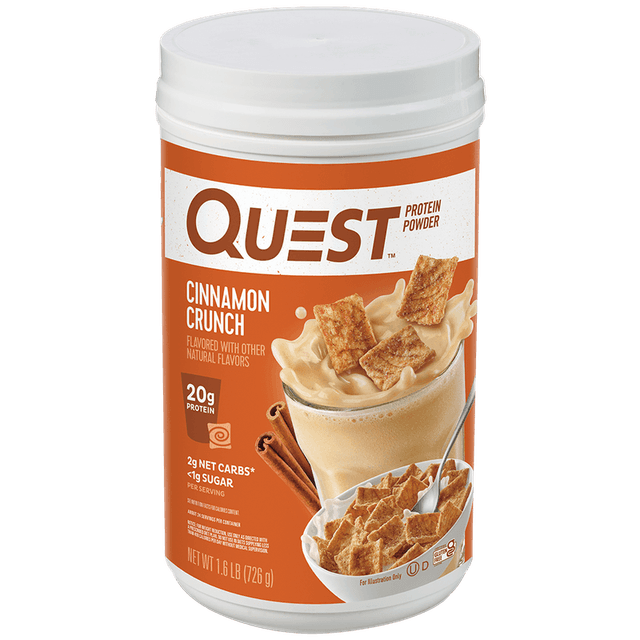
Quest · Protein Powder
Protein Powder · Cinnamon Crunch
- GLP-1 Friendly
- Gluten-Free
- Low Sugar
- No Seed Oils
- Kosher
20g protein
110 calories · per 1 scoop (30g)
✦ Protein Score
Excellent
18.2g of protein for every 100 calories. The more of the calories that come from protein, the higher the score.
Protein From
- Whey Protein Isolate
- Micellar Casein
- Milk Protein Isolate
- Caseinate
Complete proteinSee analysis
Flavours (6)

Protein Pal Analysis
Protein Source
Where the 20g of protein comes from, largest contributor first
Complete protein, fast absorbing. Filtered to remove most of the lactose and fat.
Complete protein. Slow digesting, releasing amino acids over several hours.
Complete protein. Roughly 80% casein and 20% whey, so it digests slower than whey alone.
Complete protein. Slow digesting, releasing amino acids over several hours.
Also Contains
Sugar Alcohols
- Erythritol
A sugar alcohol that is close to zero calorie, does not raise blood glucose, and is better tolerated digestively than most polyols. A 2023 study associated higher blood erythritol with cardiovascular events and found increased platelet clotting in a small trial. That evidence is observational and is not proof of harm.
Witkowski et al., Nature Medicine (2023)
Tropical Oils
- Palm Kernel Oil
Palm oil is pressed from the fruit of the oil palm; palm kernel oil comes from the seed inside that same fruit. Neither is a typical seed oil: the concerns people cite when avoiding seed oils are a high omega-6 linoleic acid load and the oxidation that polyunsaturated fats are prone to during refining and heating, and both palm oils are mostly saturated fat, with very little omega-6 and much greater oxidative stability. Palm oil is around half saturated fat, mostly palmitic acid, and a meta-analysis of controlled trials found it raises LDL cholesterol compared with vegetable oils low in saturated fat; palm kernel oil is more saturated again. Both stay solid at room temperature without hydrogenation, which is why coatings use them.
Sun et al., Journal of Nutrition (2015)
Emulsifiers & Thickeners
- Carrageenan
A seaweed extract used to stop drinks separating. Animal and cell studies report inflammation and irritation of the gut lining. Human evidence at the levels used in food is limited, and regulators currently consider it safe.
Tobacman, Environmental Health Perspectives (2001) - Cellulose Gum
Cellulose-based thickeners: cellulose gum (carboxymethylcellulose) and cellulose gel (microcrystalline cellulose), often used together in shakes. A randomised controlled feeding trial of carboxymethylcellulose in healthy adults found it altered gut bacteria and reduced the protective mucus layer of the gut. The trial was small and short.
Chassaing et al., Gastroenterology (2022)
Sweeteners
- Sucralose
Synthetic zero-calorie sweeteners such as sucralose, acesulfame potassium and aspartame. Regulators consider them safe at typical intakes, but the WHO advises against using non-sugar sweeteners for weight control, finding no long-term benefit, and in 2023 classified aspartame as possibly carcinogenic while leaving its acceptable daily intake unchanged.
WHO guideline on non-sugar sweeteners (2023)
Nutrition
per 1 scoop (30g)≤1g: the label prints “<1g” for this value.
Protein efficiency
computed from the labelIngredients
Ingredients
Protein Blend (whey protein isolate, micellar casein), erythritol, natural flavors, milk protein isolate, soluble corn fiber, coconut oil. Contains less than 2% of the following: palm kernel oil, cinnamon, lecithin (sunflower, canola, and/or soy lecithin), sea salt, carrageenan, cellulose gum, silicon dioxide, sucralose, sodium caseinate, stevia sweetener, xanthan gum, baking soda. Contains: Milk, Soy. Processed in a facility that also processes eggs, peanuts, sesame, wheat, tree nuts and fish. Contains a bioengineered food ingredient.
Nutrition values are taken from the manufacturer’s published label and may vary by flavour or region. Trademarks and imagery are the property of their respective owners.
Where Protein Powder ranks
- #9 in Best Protein Powders
- #9 in Best Whey Protein Powders
- #10 in Leanest Protein Powders
- #8 in Best Protein Powders for Women Over 50
- #8 in Best Protein Powder for GLP-1 Users
- #10 in Best Protein Powders for Seniors
- #10 in Best Protein Powders for Menopause
- #8 in Easy to Digest Protein Powders
- #9 in Protein Powders Without Seed Oils


