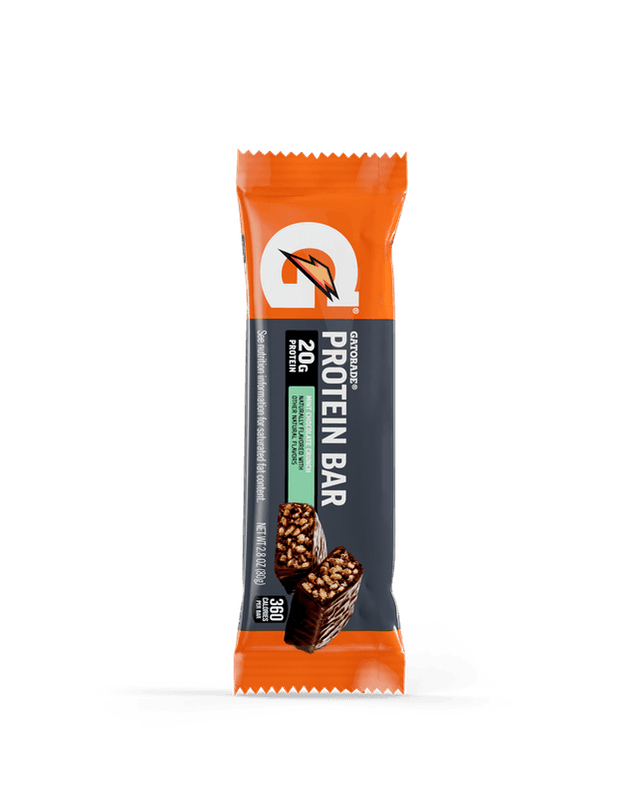
Gatorade · Protein Bar
Recover Protein Bar · Mint Chocolate Crunch
- High Sugar
- No Artificial Sweeteners
20g protein
350 calories · per 1 bar (80g)
✦ Protein Score
Average
5.7g of protein for every 100 calories. The more of the calories that come from protein, the higher the score.
Protein From
- Whey Protein Isolate
- Whey Protein Concentrate
- Milk Protein Concentrate
Complete proteinSee analysis
Flavours (6)

Protein Pal Analysis
Protein Source
Where the 20g of protein comes from, largest contributor first
Complete protein, fast absorbing. Filtered to remove most of the lactose and fat.
Complete protein, fast absorbing. The least processed whey, with more lactose and fat than isolate.
Complete protein. Roughly 80% casein and 20% whey, so it digests slower than whey alone.
Also Contains
Tropical Oils
- Palm Kernel Oil, Palm Oil
Palm oil is pressed from the fruit of the oil palm; palm kernel oil comes from the seed inside that same fruit. Neither is a typical seed oil: the concerns people cite when avoiding seed oils are a high omega-6 linoleic acid load and the oxidation that polyunsaturated fats are prone to during refining and heating, and both palm oils are mostly saturated fat, with very little omega-6 and much greater oxidative stability. Palm oil is around half saturated fat, mostly palmitic acid, and a meta-analysis of controlled trials found it raises LDL cholesterol compared with vegetable oils low in saturated fat; palm kernel oil is more saturated again. Both stay solid at room temperature without hydrogenation, which is why coatings use them.
Sun et al., Journal of Nutrition (2015)
Preservatives
- TBHQ
Preservatives that stop fats going rancid. BHA is classified by the WHO cancer agency as possibly carcinogenic to humans (Group 2B), based on animal studies; BHT is rated not classifiable. Both are permitted at limited levels.
IARC Monographs, Volume 40 (1986)
Seed Oils
- Soybean Oil
Refined oils high in omega-6 linoleic acid. Controlled trials show oils rich in linoleic acid lower LDL cholesterol compared with saturated fat, and heart health bodies support their use. The concern raised in popular coverage is about the omega-6 to omega-3 balance of the wider diet, and about oxidation products when these oils are repeatedly heated.
American Heart Association advisory, Circulation (2017)
Sugar Alcohols
- Glycerol, Glycerin
Chemically a sugar alcohol, used to keep bars soft and moist rather than to sweeten. The EU safety authority found no safety concern at food levels. Large amounts can draw water into the gut and have a laxative effect.
EFSA re-evaluation of glycerol E422 (2017)
Nutrition
per 1 bar (80g)≤1g: the label prints “<1g” for this value.
Protein efficiency
computed from the labelIngredients
Ingredients
Chocolate Flavored Coating (Sugar, Vegetable Oil (Palm Kernel Oil, Palm Oil, Sorbitan Tristerate, TBHQ (To Preserve Freshness), Citric Acid (To Preserve Freshness)), Whey Protein Isolate, Cocoa [Processed With Alkali], Natural Flavor, Soy Lecithin), Whey Protein Crisp (Whey Protein Concentrate, Corn Starch, Calcium Carbonate), Corn Syrup, Chocolate Cookie Pieces (Wheat Flour, Sugar, Palm Oil, Cocoa [Processed With Alkali], Salt, Baking Soda), Vanilla Flavored Creme Layer (Sugar, Vegetable Oil (Palm Kernel And Palm Oil), Soybean Oil, Skim Milk, Milk, Anhydrous Milk Fat, Soy Lecithin, Natural Flavor, Brown Sugar, Caramel (Glucose Syrup, Sugar, Palm Oil, Skim Milk, Glycerol, Butter (Cream, Salt), Whey, Corn Starch, Salt, Mono And Diglycerides, Natural Flavor, Soy Lecithin)), Semisweet Chocolate Chips (Sugar, Chocolate Liquor, Cocoa Butter, Soy Lecithin, Vanilla Extract), Glycerin, Invert Sugar, Partially Hydrolyzed Milk Protein Concentrate, And Less Than 2% Of: Salt, Natural Flavor, Mixed Tocopherols (To Preserve Freshness), Citric Acid (To Preserve Freshness). Contains: Milk, Soy, Wheat. May Contain: Peanut, Tree Nuts.
Nutrition values are taken from the manufacturer’s published label and may vary by flavour or region. Trademarks and imagery are the property of their respective owners.


